
More social runs, less competitive pressure
One of the most visible changes is the way running is increasingly used as a social anchor rather than a performance test. Instead of “race training groups” organised around splits and speedwork, many meet-ups now prioritise conversation pace, regroup points, and inclusive energy: you can show up even if you’re unfit, tired, restarting after a break, or just not in the mood to push.
Globally, this social shift is measurable. Strava’s annual trend reporting has repeatedly pointed to the rise of run clubs and group activity, with “making social connections” highlighted as a leading motivator for exercise and notable growth in participation.
There’s also a mental-health logic beneath it. Research on group-based physical activity consistently links participation to social support, cohesion, and better adherence—people are more likely to keep showing up when they feel they belong. In other words, the group isn’t just company; it’s the structure that makes the habit stick.
In Malaysia, where adult life can be packed with long commutes, family responsibilities, and irregular schedules, the “social run” format is perfectly adapted. The run becomes a reliable appointment that isn’t high-stakes. You don’t need to be “race-ready.” You just need to arrive.
Park runners and neighbourhood loops
Casual running culture is deeply shaped by where it happens. For many Malaysians, the most meaningful running routes aren’t iconic race courses—they’re everyday spaces: parks, lakeside loops, and familiar neighbourhood circuits that can be repeated without planning.
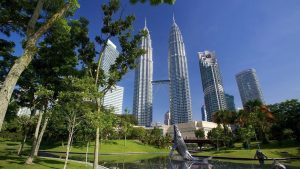
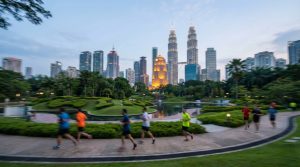
In Kuala Lumpur, KLCC Park is a strong symbol of that everyday running habit. It’s widely known for having a dedicated jogging track and an environment that feels approachable for short runs, walk breaks, and casual meet-ups. The appeal isn’t that it’s “hard.” The appeal is that it’s easy to return to.
The same idea extends to other green pockets—shaded paths, flatter routes, places where new runners can try a gentle jog without worrying about traffic or getting lost. Casual running thrives in spaces that offer simple navigation and psychological comfort.
Neighbourhood loops matter just as much. These are the routes done before work or after dinner: one round of the housing area, a few turns around shoplots, an easy out-and-back to a landmark. The loop format is forgiving: you can cut it short, extend it, or stop altogether without feeling like you “failed.”
This is also where city initiatives can amplify casual running’s growth. KL Car-Free Morning—where certain roads are closed to vehicles—explicitly creates a safe, shared public space for walking, jogging, and cycling. It’s a civic invitation to move without needing a race bib.
When roads and parks welcome low-pressure participation, casual running becomes less of a niche hobby and more of a normal weekend ritual.
Running as stress relief, not identity branding
Perhaps the most defining difference between casual running and marathon-driven culture is why people run. For many casual runners, running isn’t an identity project anymore—it’s emotional maintenance.
This aligns strongly with the broader evidence that exercise supports mental health. Large-scale reviews and meta-analyses have found exercise to be an effective intervention for depressive symptoms, and forms like walking or jogging are frequently highlighted among beneficial modalities. Even outside clinical contexts, physical activity and movement is widely associated with improved mood and reduced stress-related symptoms.
In practical, everyday terms, this means the run doesn’t need to be heroic to “work.” A 20–30 minute jog can be enough to feel calmer, sleep better, or stop mentally rehearsing work problems. The goal becomes “I feel better after,” not “I got faster.”
And importantly, the culture around this kind of running looks different. People may still track runs—but many are less invested in turning every effort into a statement. The pressure to perform publicly (fast splits, long mileage, constant progress) can fade when the run is treated as personal reset rather than proof of discipline.
Research on the “exercising self” and social media identity work suggests that online self-presentation can shape how people relate to exercise—sometimes in motivating ways, sometimes in ways that add pressure or shift focus from internal experience to external validation. Casual running, at its best, pulls the experience back toward the body and the moment: today’s run is for today’s mind.
Why it’s not about marathons (even if races still exist)
Marathons remain meaningful for many runners. They offer community, a sense of accomplishment, and the electric atmosphere of an event day. But casual running is rising because it answers a different modern need, that is sustainability.
Training for long-distance racing demands time, recovery, and consistent life structure. That’s hard to maintain in seasons of stress, caregiving, shift work, or unpredictable workloads. Casual running offers a model that adapts to real life. If you can only manage a short loop this week, you’re still doing it. If you miss a week, you return without the feeling that you “ruined” a training plan.
This shift also changes how people approach running goals. In marathon culture, distance often becomes the main storyline. In casual culture, goals become more flexible:
- “I want to run twice a week.”
- “I want to feel less anxious.”
- “I want to see my friends.”
- “I want a habit I can keep.”
It’s not anti-marathon. It’s just not marathon-centered.
The new “third place”: run clubs as community infrastructure
A striking element of casual running’s growth is how it functions socially. For many adults, life narrows into two places: home and work. Casual run meet-ups are increasingly acting as a “third place”—a recurring, low-cost, low-barrier community space.
This isn’t just a vibe; it’s supported by what we know about exercise groups. Belonging to sport and exercise groups has been associated with protective effects against depression, potentially by increasing social connection and reducing loneliness while supporting regular activity.
That’s why formats like parkrun fit so naturally into this era. Parkrun’s model is simple: free, weekly 5K events where people can walk, jog, run, volunteer, or spectate—participation without intimidation. Malaysia’s parkrun presence reflects this kind of welcoming structure focusing on community-first by design. Casual running grows fastest when people feel they’re joining a community, not signing up for a performance test.
Shorter distances are being normalised (and celebrated)
Another quiet revolution: shorter runs are no longer treated as “not enough.”
A 3K loop can be a complete workout. A gentle 5K can be a full win. This is a major psychological shift away from a culture that sometimes implies you haven’t “really run” unless you’ve trained for a big event.
Evidence also supports the idea that running doesn’t need to be extreme to deliver mental benefits. Reviews of running and mental health suggest that even variable lengths and intensities sees in casual running can support mood and well-being.
Shorter, more consistent running tends to be easier to recover from, easier to fit into schedules, and easier to maintain over years—especially for people balancing work, family, and the realities of adult fatigue.
A softer culture: inclusivity over intensity
Casual running often feels more inclusive because it removes the silent hierarchy of pace. Newcomers can join without feeling like they’re “slowing the group down.” Walk breaks are not treated as failure, while people can participate in ordinary clothes and basic shoes.
This inclusivity expands the running population beyond the traditionally “sporty.” It invites the stressed office worker, the parent returning to fitness, the older adult experimenting with movement, and the beginner who simply wants to breathe better and sleep better.
And it changes what gets celebrated. Instead of medals and rankings, the wins become:
- showing up,
- finishing the loop,
- keeping it gentle,
- laughing with friends,
- feeling lighter afterward.
What this trend says about Malaysia right now
The rise of casual running in Malaysia reflects a broader cultural recalibration. In a high-stimulation, high-pressure era, Malaysians are gravitating toward health habits that are less performative and more practical—habits that soothe rather than strain. People are no longer asking, “How far can I push myself?” but “How can this fit into my life?” Running is being reframed as a companion to daily living rather than a competitive pursuit.
In the end, casual running isn’t a downgrade from marathon culture. It’s an expansion of what running can mean. It allows running to be ordinary—and therefore sustainable across life stages.
And in many ways, that’s the point: the most powerful running habit is not the most impressive one. It’s the one people can keep returning to—week after week, loop after loop—because it makes life feel better, not harder.
And perhaps that is the real finish line worth celebrating.