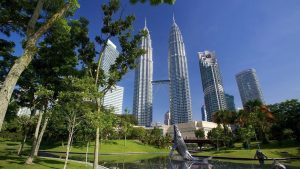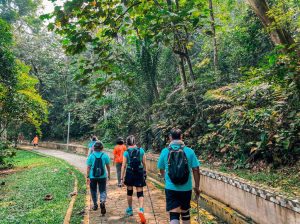

There’s a particular kind of Malaysian-city magic that happens when you lace up your shoes and step outside. The air is a little warm, the streets are slowly waking up, and somewhere nearby a makcik is already watering plants like it’s a competitive sport. Whether you run solo with your thoughts or roll deep with a crew, the choice usually isn’t about “which is better” so much as “what do I need today?”
Running alone can feel like pressing a mental reset button. Running together can feel like plugging yourself back into the city’s social current. In Malaysia where routines, neighbourhood vibes, and safety perceptions can shift block by block, your preference may also change depending on time of day, location, and how much battery your phone has.
Below is a look at how solo vs group running plays out in Malaysian cities through the lens of safety, gendered experiences, and the different kinds of joy you get from introspection versus community.
Safety perceptions: how “safe” feels is part environment, part headspace
Ask ten runners in KL, PJ, Penang, or JB where they feel safest, and you’ll get a mix of answers that sound like a weather forecast plus urban planning notes:
- “Bright lights, lots of people.”
- “Wide paths, no weird corners.”
- “Where the guards can see you.”
- “Somewhere I can bail out to a mamak if needed.”
That’s not paranoia; that’s basic route intelligence.
Research on perceived safety in public spaces consistently finds that lighting, visibility, maintenance, and the presence of other users shape whether people feel comfortable being active outdoors. Studies on park safety perceptions highlight the importance of factors like visibility/line of sight, cleanliness, upkeep, and “who else is around” in determining how safe a space feels, often with clear differences by gender.
In Malaysia specifically, research looking at safety perception and outdoor physical activity in campus environments also points to how the built environment and feelings of safety can affect whether people choose to be active outside. In other words: it’s not only motivation; it’s also whether the environment feels predictably safe.
Solo safety feels personal; group safety feels structural
When you run alone, your safety plan tends to be internal:
- route familiarity
- phone access
- staying in “busy” corridors
- knowing where you can stop if something feels off
When you run with others, safety becomes more structural:
- numbers (more witnesses, less vulnerability)
- shared local knowledge (“Don’t take that back lane, it’s dark”)
- mutual check-ins (the underrated power of “You okay?”)
This difference matters because “safe” is not only a crime statistic. It’s a feeling that can determine whether you even step out the door.
Gendered experiences: why the same route can feel different to different runners
If you’ve ever heard women runners swap stories, there is a pattern – the mental load is often heavier. Not because women are “more anxious,” but because public spaces can treat them differently, especially when they’re alone.
Large-scale surveys and reporting on women’s running experiences document high rates of harassment (from catcalling to being followed), and how it changes behaviour: choosing different routes, adjusting timing, altering clothing, running with a buddy, or avoiding outdoor runs entirely.
There’s also research discussing how women’s safety concerns are shaped by both direct experiences and awareness of what happens to others.
Qualitative studies on women exercising outdoors similarly shows how public space can feel like it comes with “negotiations”, where vigilance becomes part of the workout.
In Malaysia, gendered strategies often look like “common sense”… until you list them
Many women runners (and their friends/families) share variations of the same playbook:
- daytime or early-morning runs over late-night runs
- well-lit loops (parks, lakes, popular promenades)
- running in groups or with clubs
- location-sharing on phones
- avoiding isolated stretches, underpasses, or quiet carparks
None of this is “overreacting.” It’s a response to real social patterns documented internationally—plus local context. And it helps explain why group runs can feel freeing rather than merely social: they reduce the amount of vigilance you have to carry alone.
It’s also why some brands and communities have created women-focused safety initiatives and local women’s runs—because the barrier isn’t fitness; it’s comfort and perceived risk.
Solo runs: introspection, rhythm, and the quiet pleasure of being your own friend
A solo run can be oddly therapeutic, even if it starts as “I just need to get my steps in.” There’s something about steady movement that invites your brain to unclench. You notice details: the shape of the clouds over condos, the smell of nasi lemak drifting out of a shoplot, the moment the city sounds shift from “sleepy” to “fully operational.”
There’s a strong evidence base linking physical activity with mental health benefits, including mood and wellbeing improvements. Systematic reviews consistently find positive associations between physical activity and mental health outcomes.
Running specifically has been studied for its relationship with psychological wellbeing; a scoping review of running and mental health literature suggests meaningful links between running and outcomes like mood and anxiety (with benefits seen across different run durations and contexts).
What solo gives you (that groups sometimes can’t)
- Control: pace, route, playlist, stop-start freedom
- Privacy: you can feel messy feelings without explaining them
- Flow: you’re not negotiating speed or conversation
- Reflection: the run becomes a moving journaling session
But solo running has a trade-off: it amplifies safety and motivation friction
If you’re alone and it’s dark, quiet, or unfamiliar, you may spend too much energy scanning for risk. Even if nothing happens, that mental effort can turn “relaxing run” into “tense cardio.” That’s not a character flaw; it’s your nervous system doing its job.
So for solo runs in Malaysian cities, many runners naturally gravitate toward environments that reduce uncertainty: well-used parks, predictable loops, and places with steady foot traffic. Research on Malaysian parks and user expectations highlights how maintenance, facilities, and overall park management affect user experience, which are factors that also feed into perceived safety and willingness to return.
Group runs: community, motivation, and the social health bonus
There’s a reason run clubs are everywhere now. In Malaysian cities, group runs have become their own little ecosystem: some are serious training packs, others are “run a bit, chat a lot, take photos, eat after.”
Local guides and lifestyle coverage show just how many options exist around KL and the Klang Valley, indicating that social running in KL has become a mainstream urban habit, not a niche hobby.
And on a deeper level, group activity brings benefits that go beyond calories. Research reviews on sport and physical activity suggest social and psychological benefits tied to participation—like belonging, support, and social connection.
There’s also emerging evidence connecting physical activity with reduced loneliness, where the social experiences around activity may play a meaningful role.
What group runs do brilliantly:
- They lower the activation energy. If your friends are going, you go.
- They keep you consistent. “See you Thursday” is a powerful fitness tool.
- They normalise beginners. The right group makes “slow” feel completely fine.
- They make cities feel friendlier. You start recognising faces, routes, rituals.
Some research comparing group-based versus individual approaches suggests group dynamics can improve certain outcomes (often through support, accountability, and enjoyment), and long-term community-based programs are frequently discussed in relation to adherence.
Specifically in running communities, research has explored how running alone vs in groups relates to social capital and quality of life, suggesting the “with others” element can shape how running connects to wellbeing.
The Malaysian twist: group running isn’t new—it’s just having a glow-up
One of the most famous running social traditions, Hash House Harriers, started in Kuala Lumpur in 1938, built around the idea of a “drinking club with a running problem”, indicating that Malaysia indeed has a long history of running as community and culture, not just training.
Which one should you choose?
Choose based on what kind of day you’re having—and what kind of run your environment supports.
Choose a solo run when you want:
- a mental cleanse
- a gentle routine
- a pace that matches your body, not a group
- quiet confidence-building (especially for new runners)
Choose a group run when you want:
- safety-in-numbers comfort
- accountability and motivation
- social connection
- route confidence in a busy city
If you’re someone who switches between both, you’re not “inconsistent.” You’re just emotionally intelligent.
Practical tips for Malaysian city runners (solo or group)
For safer-feeling solo runs
- Prefer bright, popular loops and predictable routes.
- Run “out-and-back” or short loops if you’re unsure about an area.
- Share live location with someone you trust.
- Keep one ear free if using headphones (especially near roads).
- Treat your gut feeling as valid data.
For better group runs
- Pick groups that match your vibe (social vs training, beginner-friendly vs performance).
- Clarify pace expectations upfront—no one enjoys surprise suffering.
- If you’re new, start with a shorter session and leave while it’s still fun.
- Choose inclusive groups that make safety and respect non-negotiable.
The “best” run is the one that fits your life
Running alone and running together aren’t opposing identities, they’re two different tools.
Solo runs are where you build your inner soundtrack—your self-trust, your resilience, your ability to be alone without feeling lonely. Group runs are where you borrow sparks from others—motivation, laughter, that one friend who somehow makes 6 a.m. feel normal.
In Malaysian cities, where safety perceptions and gendered experiences can shape the running experience in real ways, being flexible is a superpower. Some days you’ll want the calm of a solo loop. Other days you’ll want the comfort and joy of a pack.
Either way, you’re still a runner, and KL city being humid, lively, unpredictable, full of makan temptations can still be your playground.