There are two maps every runner carries: the one on their app and the one they read with their bones. The first measures pace, distance and elevation; the second charts mood, memory and the weathered corridors of feeling you travel when you run. In Malaysia, where colonial shophouses line seaside promenades and mist coats the highlands — those invisible contours are vivid. A 5K in KL is not the same interior movement as a 10K along Penang’s seafront or a slow climb through Cameron Highlands. Each place shapes how you breathe, what you remember, and how the body and brain translate effort into emotion.
This article traces that emotional geography. It combines the lived textures of place with the hard science of exercise psychology, environmental psychology and neurobiology to show why KL often reads as tension then release, Penang as nostalgia, and the highlands as quiet endurance, and how other Malaysian terrains write their own moods into our runs.
Why where you run matters: the science in brief
Exercise is a validated treatment for mood disorders – recent comprehensive reviews and meta-analyses of randomised controlled trials show that aerobic activity such as jogging or brisk walking produces moderate reductions in depressive symptoms and meaningful improvements in mental health. Running is not just fitness; it’s an evidence-based mood regulator.
Second, the biochemical mechanism behind the celebrated “runner’s high” is now better understood. Animal and human research points to endocannabinoids — the body’s cannabis-like molecules — playing a central role in post-exercise reductions in pain and anxiety, complementing endorphin and opioid systems. Long, sustained aerobic work reliably changes brain chemistry in ways that feel like calm and clarity.
Third, where you run modulates psychological restoration. Attention Restoration Theory (ART) argues that natural settings restore directed attention and reduce cognitive fatigue; a forest loop feels different because it gives the brain a different kind of work. Reviews of “green exercise” and “blue space” research show that nature-rich and water-facing environments often amplify mental-health benefits, although trials vary and context matters.
With those foundations in mind, the emotional signatures of Malaysian places start to make sense.
Kuala Lumpur — tension then release

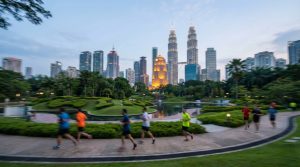
Kuala Lumpur is an emotional interval – a rising line of baseline tension followed by explicit release. The city’s sensory experience, namely traffic, construction, flashing signs, dense crowds, keeps the nervous system at low-level alertness. Urban environments increase cognitive load and demand faster threat detection: pedestrians dodge, pavements force attention, and heat intensifies physiological arousal.
Running, by contrast, is biochemistry in motion. As you thread between buildings or escape into a pocket park, your breathing shifts, cadence finds a rhythm, and neurochemistry follows. The result is dramatic: the run does the work of metabolising urban stress. Runners in KL often report the precise sensation of “earning calm” — a city-fuelled tension traded for a measurable lowering of anxiety, sharper focus and a sweeter sense of ease. The longer and more consistent the effort, the stronger the endocannabinoid- and endorphin-mediated payoff.
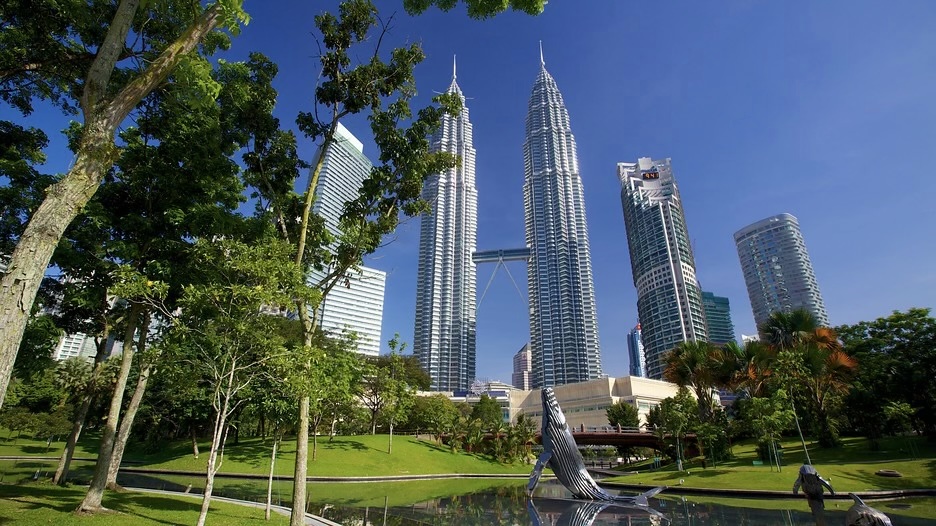
This pattern explains why many Kuala Lumpur routes are best designed as contrasts: a noisy urban approach that opens into KLCC Park, Taman Perdana, or Titiwangsa’s lakes. Those green interludes are not decorative; they are restorative nodes where the brain can shift from vigilance to rhythm.
Penang — nostalgia in motion
Kuala Lumpur is an emotional interval – a rising line of baseline tension followed by explicit release. The city’s sensory experience, namely traffic, construction, flashing signs, dense crowds, keeps the nervous system at low-level alertness. Urban environments increase cognitive load and demand faster threat detection: pedestrians dodge, pavements force attention, and heat intensifies physiological arousal.
Running, by contrast, is biochemistry in motion. As you thread between buildings or escape into a pocket park, your breathing shifts, cadence finds a rhythm, and neurochemistry follows. The result is dramatic: the run does the work of metabolising urban stress. Runners in KL often report the precise sensation of “earning calm” — a city-fuelled tension traded for a measurable lowering of anxiety, sharper focus and a sweeter sense of ease. The longer and more consistent the effort, the stronger the endocannabinoid- and endorphin-mediated payoff.
This pattern explains why many Kuala Lumpur routes are best designed as contrasts: a noisy urban approach that opens into KLCC Park, Taman Perdana, or Titiwangsa’s lakes. Those green interludes are not decorative; they are restorative nodes where the brain can shift from vigilance to rhythm.
The Highlands — quiet endurance
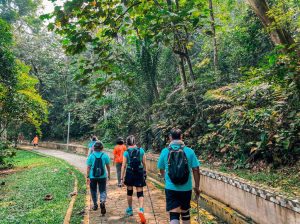
The highlands (Cameron, Fraser’s Hill, Genting’s forested edges) are discipline turned contemplative. Mist muffles sound, pine scent slows breath, long inclines demand patience. Physiologically, sustained uphill work shifts metabolic demand and recruits endurance systems; psychologically, low-stimulus natural environments encourage inward focus and attentional restoration. That combination generates what runners call quiet endurance: a steady, dignified calm that arrives through effort rather than distraction.
The runner’s high in these places is not a burst — it’s a slow bloom. Endocannabinoids and mood benefits accumulate gradually and sustain longer, producing resilience and a sense of composure that outlasts any single run. Running in the highlands teaches you how to carry difficulty with equanimity.
Coastal strips and islands — blue calm and reflective joy

Malaysia’s beaches and coastal promenades (from Terengganu’s long shores to Langkawi and Penang) script a different mood: expansive stillness. The visual and auditory simplicity of sea and sky reduces cognitive clutter; wave rhythms sync with footfall; horizons reframe problems. Research into blue spaces links proximity to water with improved mood, stress reduction and increased likelihood of physical activity — ideal conditions for runs that feel both restorative and quietly joyful.
Coastal nostalgia here differs from Penang’s cultural nostalgia: it is elemental — childhood summers, first swims, salt on the lips. That elemental recall is often lighter, flushing the run with uncomplicated contentment.
Small towns and kampung roads — belonging and gentle connection
Kampung lanes and small-town loops offer one of the gentlest emotional architectures of Malaysian running: belonging. Micro-social interactions — a greeting from an elder, children playing at the road’s edge, a vendor’s wave — produce low-grade social reinforcement shown in social-psychological studies to buffer loneliness and enhance wellbeing. Running here is less about performance and more about being woven into a social fabric. The result: runs that feel domesticated, nourishing and quietly proud. They are the kind of routes you return to when you want to feel held rather than tested.
Sabah and Sarawak — awe and elemental perspective
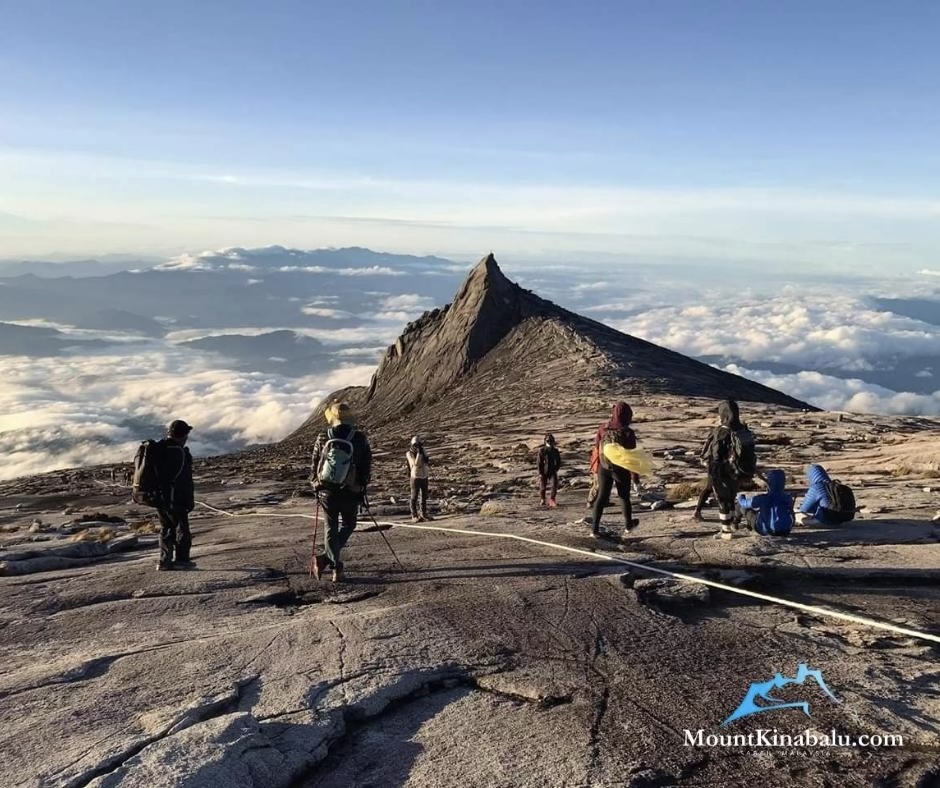
East Malaysia moves the palette toward scale and wonder. Rainforest trails, coastal headlands and mountain foothills create experiences of awe — an emotion psychologists describe as one that reduces self-focus, increases prosocial feelings and expands perceived meaning. Novel sensory input (birdsong, sudden rain, dense canopy) amplifies memory formation and intensifies the emotional payoff of effort. In Borneo, runs become encounters with ancient processes; while fatigue is contextualised as part of something deep and generative.
Practical takeaways for runners (and planners)
- If you run in KL, design routes with intentional green breaks. Use the city’s pockets of nature to convert urban tension into physiological release.
- In Penang, allow time for pauses — noticing murals, shops, smells deepens the nostalgia that many runners value.
- Highlands reward slow pacing. Treat climbs as meditative practice rather than performance intervals.
- Coastal runs are restorative: sunrise or low-tide routes magnify blue-space benefits.
- For communities and urban designers: invest in green corridors, safe promenades and shoreline access — these are mental-health infrastructure as much as recreation.
An invisible map you redraw every day
The emotional geography of running is not a static atlas. It is personal and mutable. A route that once felt like escape can become a ritual; a seaside jog that always soothed might, after loss, become a place for grief. Scientific studies give us language and mechanism — endocannabinoids, attentional restoration, blue-space benefits — but the real map is practical and intimate. Every run redraws your interior map a little: what you notice, what you remember, how effort changes you.
So lace up and choose a mood. For tension and release, point your shoes toward KL and lean into the green gaps. For nostalgia, follow Penang’s alleys and let memory ride your stride. For quiet endurance, climb into the highlands and learn to move slowly but surely. Malaysia will answer you differently in each place; your body will answer back. They are a clearer map than any route planner: your own emotional geography, discovered one step at a time.